The short version
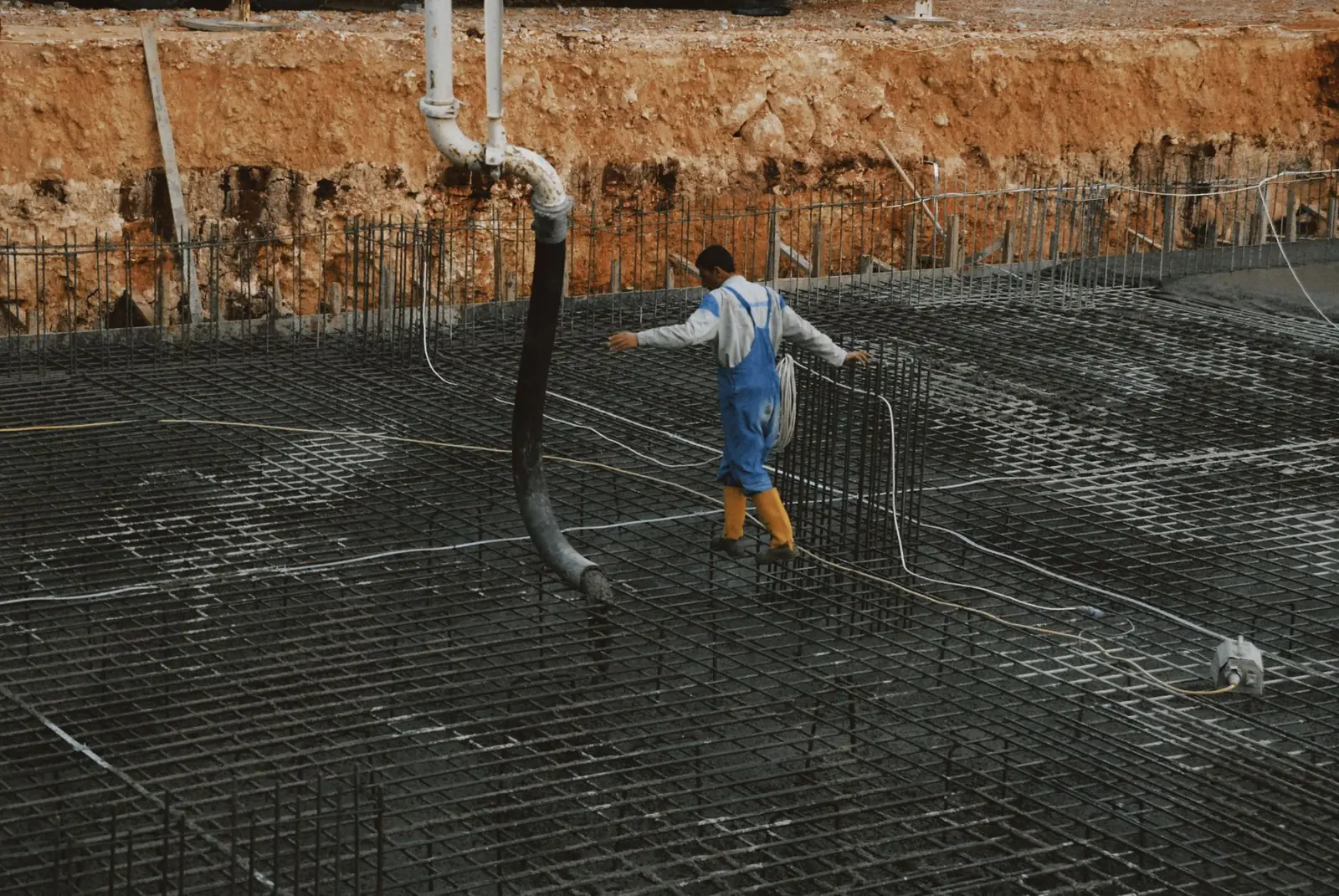
Both words describe concrete sprayed through a hose under pressure onto a cage of steel. The difference is one step in the process: where the water gets added.
Gunite is a dry mix. Sand and cement travel through the hose dry, and the nozzle operator introduces water at the very end, at the nozzle. Shotcrete is a wet mix, batched with its water before it is pumped.
Why the difference matters on site
With a dry mix the operator controls hydration continuously, wall by wall. On a pool with a lot of shape, benches, steps, a raised spa, a tight radius, that control is useful. It is also why the result depends heavily on who is holding the nozzle.
With a wet mix the water content is fixed at the batch plant. The mix is consistent, and the variable moves from the nozzle to the logistics: the concrete has a working window, so the pour has to keep moving.
What actually decides shell quality
Not the mix. Three other things:
- The steel underneath it. Bar spacing, lap length and placement are set before any concrete moves and cannot be corrected afterwards.
- The application. Voids behind the steel, called shadowing, are an application fault in either method.
- The cure. Concrete is generally specified to reach design strength at twenty eight days. The American Concrete Institute guidance for shotcrete, ACI 506, treats curing as part of the work rather than a waiting period.
What to ask a builder
Skip "gunite or shotcrete". Ask how they cure the shell, how long they keep it wet, and who inspects the steel before the spray. Those answers tell you considerably more.